


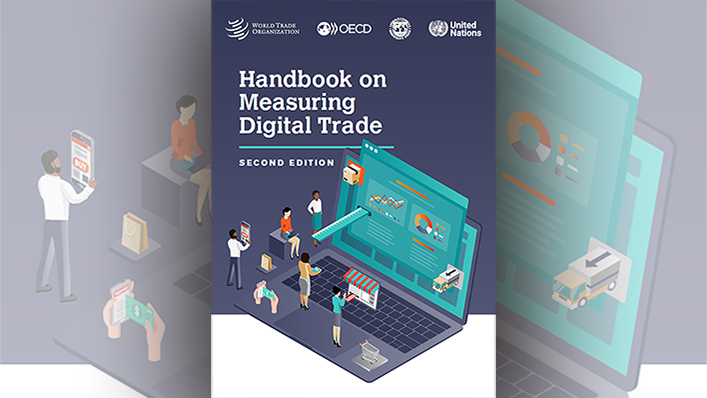
Geneva - A new edition of the Handbook on Measuring Digital Trade issued on 28 July provides a framework and practical guidance on how to measure digital trade. Building upon the first edition issued in 2019, the Handbook aims to address the challenges inherent in measuring digital trade and to establish consistent practices that will allow for comparable data across countries. The publication is jointly authored by the WTO, the International Monetary Fund, the Organisation for Economic Cooperation and Development and the United Nations Conference on Trade and Development.
The measurement of digital trade offers policymakers statistical evidence on the significant impact of digital trade on the global economy. Digital technologies have made it increasingly feasible for buyers and sellers to place and receive orders on a global scale. They also enable the instantaneous remote delivery of services directly into businesses and homes.
The Handbook focuses on two key elements: digitally ordered trade and digitally delivered trade. Furthermore, it highlights the important role of digital intermediation platforms (DIPs) in facilitating digital trade and addresses particular compilation challenges in measuring DIP transactions.


You cannot copy content of this page