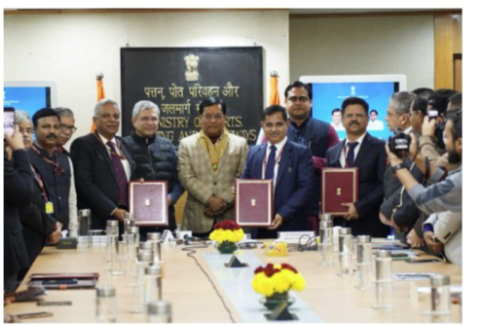



NEW DELHI : Eyeing a greater presence along the South East Asian trade route, and countering China’s dominance in the region, India is engaging with its two key neighbours, Myanmar and Bangladesh, pushing for better port and waterways connectivity across a 5,000 km – odd grid.
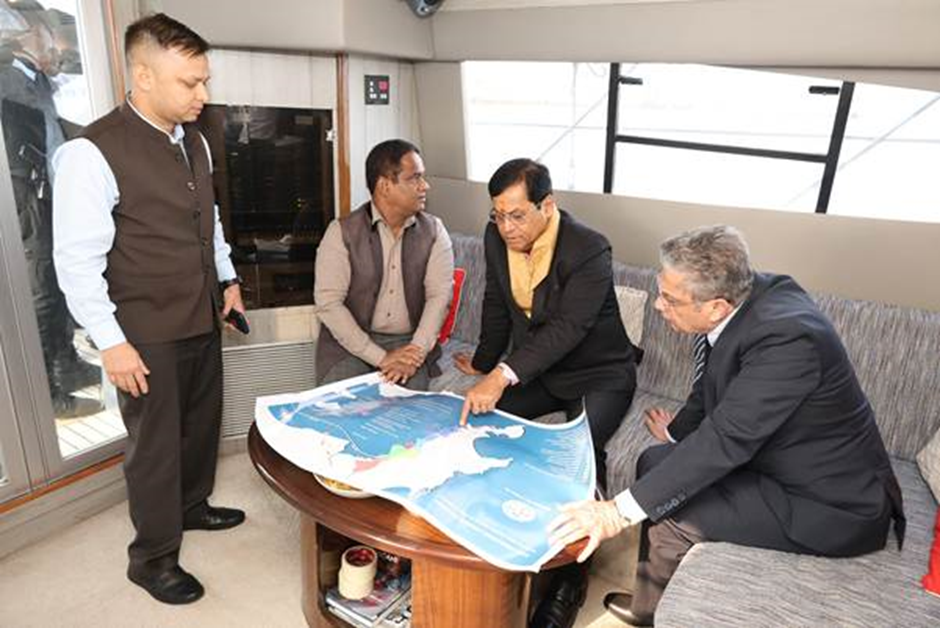
Apart from investment in ports and a multi-modal logistics hub in Myanmar, India is also engaging with Bangladesh for dredging activities across connecting waterways while linking its own inland waterways network with the neighbourhood’s ports, says Sarbananda Sonowal, Union Minister for Ports, Shipping and Waterways (MoPSW).
The idea, he tells during an exclusive interaction, is to to connect India to trade routes linking Thailand and other ASEAN nations like Laos, while also ensure access to Singapore port, a key touch point on the international shipping route.
“The Eastern Regional Waterways Grid, covering some 5,000 kms, will cover our own inland waterways and river networks, Bangladesh ports, and investment in Myanmar port,” Sonowal added.
Operations recently began at the Sittwe Port in Myanmar, that were partly financed by India, and the first batch of cargo movement between Kolkata and Sittwe has happened.
Following a pilot shipment of rice to Bangladesh in March 2023, the first official cargo of 20,000 bags comprising 1,000 metric tonnes of cement, was flagged off in May and was received a few days later.
The Sittwe Port is a seaport designed to handle 20,000 DWT (dead weight tonnage) at its maximum capacity. At present, it is operated for 6,000 DWT with a draft of 7.9 meters.
“However, the same will be increased to its maximum capacity with the enhancement of available draft for accommodating large cargo ships,” Sonowal explained.
Operations at the Sittwe port have been hit following Cyclone Mocha on May 15. And the port jetty is operational only for relief materials for Sittwe town and for adjoining areas, port officials added.
Sonowal added Indian cargo liners are already using the India – Bangladesh protocol route for better regional connectivity. The routes include Kolkata – Pandu – Kolkata; Kolkata – Karimganj – Kolkata; Rajshahi – Dhulian – Rajshahi and Pandu – Karimganj – Pandu.
Recently, Bangladesh gave India access to transport goods to the North East through its Chattogram and Mongla ports. Indian traders have to pay a transshipment fees (and some other fees too).
India has already carried out four trial runs across Mongla – Tamabil – Dawki; Mongla – Bibibazar – Srimantapur; Chattogram- Sheola – Sutarkandi and Dawki – Tamabil – Chattogram routes.
“Movement of cargo ships in the neighbourhood are up substantially,” Sonowal said.
According to him, offers to carry out dredging of waterways have also been made; and dredging activities are being carried out in the Jamuna region (Brahmaputra as it enters Bangladesh is called Jamuna).
“NW1 and NW2 will be connected through the Indo – Bangladesh protocol route and it has the potential to be one of the busiest routes,” he said.


You cannot copy content of this page