

AHMEDABAD : Business Tycoon Gautam Adani-led Adani Ports and Special Economic Zone Ltd (APSEZ) said it has “replaced” the much followed “landlord” model of port operations with a “service-driven approach” that has fetched greater success for India’s biggest private port operator, in stark contrast to the Union government’s newfound penchant for this global model.
APSEZ “went against convention” by offering a consolidated single window service encompassing marine, stevedoring, cargo handling, storage, warehousing, transportation, and other value-added logistics services.
APSEZ’s transformation from a mere port cargo intermediary into a holistic port cum logistics service provider will likely trigger a discourse on what is the best model for operating ports in India at a time when reducing the logistics costs to back India’s economic ambitions has gained centre stage in policy making.
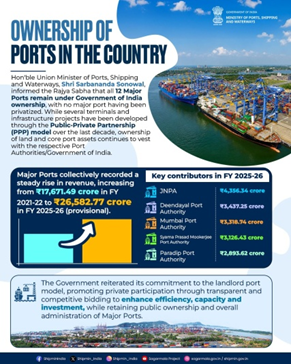
Under the landlord model, the publicly governed port authority provides the basic infrastructure such as dredging and breakwater while the cargo handling activities are outsourced to specialists in the field.
The landlord port, in return, gets a share of the revenue from the private entity. APSEZ said it has replaced the landlord model at its ports which helped “transform” India’s ports sector.
Earlier, ports were owned by one company who farmed out services to vendors. In India, port owners worked independent of supporting arms. A port service was typically seen as only one part of the overall logistic solution. Before APSEZ, ports were standalone entities with little synergy between them.
“APSEZ walked the road less travelled; it selected to own all services. This did two things: it established control and empowered the Company to provide an integrated solution. The Company has emerged as a holistic port cum logistics service provider, graduating from what could have been a one-off transaction into an enduring relationship,” the Company said in its Annual Report for FY22-23.
According to APSEZ, the landlord port model “generally creates an inefficient flow of information/services amongst various port stakeholders”.
“At APSEZ ports, all these facilities/services such as pilotage, stevedoring, yard management, receipt and dispatch of cargo, dredging amongst other services, are being offered by a single operator (APSEZ), resulting in a superior service standard, customer retention and margins,” it said explaining the virtues of a port-plus model. This enabled better control over operations and empowered the Company to deliver better customer experience and margins.
“APSEZ continues to be amongst the most profitable port operators globally with a port EBITDA margin of 70 percent,” Gautam Adani, Chairman and Managing Director, APSEZ, wrote in the Annual Report.
In FY23, APSEZ handled 339.2 million tonnes of cargo, earning Rs20,852 crores. Under the landlord port model, port customers have to negotiate with different service providers for a solution.
APSEZ “went against convention” by offering a consolidated single window service encompassing marine, stevedoring, cargo handling, storage, warehousing, transportation, and other value-added logistics services.
The one-stop shop solution helped moderate transaction processing time, accelerating a (quick) cargo turnaround, resulting in stronger customer retention through enhanced convenience.
Most port companies, it said, are recalled by their large infrastructure and equipment.





You cannot copy content of this page