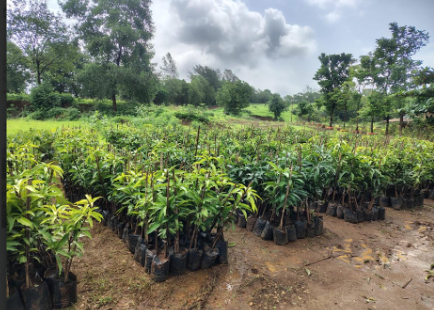


Mumbai - State-owned Jawaharlal Nehru Port Authority (JNPA) plans to build an export oriented agricultural produce processing and storage facility with private funds at Sheva, Raigad in Maharashtra as it aims to enhance the shelf life and quality of export agricultural produce and increase the quantum of India’s agricultural exports.
The facility seeks to extend the shelf life of agricultural produce and satisfy the sanitary and phytosanitary criteria set by destination nations and help minimize losses resulting from rejection by importing countries.
The facility will be crucial in helping India create the procedures, quality criteria, and packaging requirements necessary to satisfy the highest international standards for agricultural products. “This is a first of its kind facility in an Indian port and is also JNPA’s business with social commitment, especially to our farmers,” Mr. Unmesh Wagh, IRS, Chairman in Charge of J N Port Authority and the driving force behind the project was quoted recently as saying.
“It is a win-win situation because they can aggregate the produce at one place which is a state-of-the-art facility, then either export or use the port’s coastal berth to distribute all over India,” Wagh said.
“In this way, our agricultural produce waste will be reduced and income will be enhanced. It can act as a model for other ports to follow,” Wagh added.
The export oriented agricultural produce processing and storage facility, estimated to cost Rs.284.19 crores, is planned on a 27-acre land parcel accessible via the Funde – Nhava Sheva Road.
The project will be awarded to a private firm for a concessionaire period of 30 years, including construction period of 1.5 years. It will be designed to handle 0.8 million metric tonnes (MMT) to 1.2 MMT of agricultural cargo over 30 years.
The proposed agri facility seeks to elevate agricultural exports by offering storage, preservation, and quality control. The project will empower farmers and exporters, catalyse demand, and nurture rural growth. The benefits span higher product prices, increased employment, and a boost to the agricultural sector.


You cannot copy content of this page