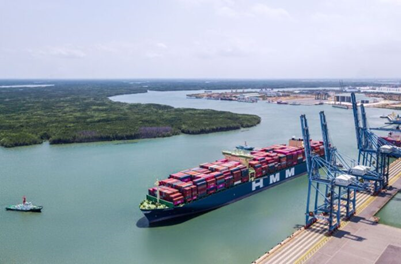
WASHINGTON: The good news is that there were fewer than 100 container ships stuck waiting off North American ports as on last week. The bad news is that there were still 99 container ships offshore and the pre-COVID norm was in the single digits.
There’s still a long way to go to clear the backlog. But the current tally is now back to June levels and 35% off recent highs.
The number of ships waiting off North American ports peaked at around 150 in January, with waiting vessels almost entirely off the West Coast.
The queue fell through the spring as Los Angeles and Long Beach, California, improved their cargo flows. It rebounded back to over 150 in late July, propelled by traffic jams off East and Gulf Coast ports.
It has gradually declined since then.
According to an American Shipper survey of Marine Traffic ship-position data, together with the latest queue lists from California ports, there were 27 container vessels off the West Coast and 72 off the East and Gulf coasts as of mid-day Friday, last week.
Imports, queues and spot rates
Assuming U.S. imports continue to fall month on month, ports should continue to bring down ship backlogs through the remainder of the year.
Data from Descartes and Panjiva showed that U.S. imports fell 12% in September versus August. Data from PIERS showed an 8.2% month-on-month decline.
As port queues wind down, vessel capacity that had been tied up waiting is released into the market.
This increases effective vessel capacity and the number of slots available for cargo. To the extent this is not offset by carriers “blanking” (canceling) sailings or suspending services, declining port congestion creates downward pressure on spot rates.
Over the past week, Drewry’s index for Shanghai-Los Angeles spot rates fell another 13% to $2,619 per forty-foot equivalent unit. Its Shanghai-New York index declined 8% to $6,321 per FEU.
Rates have held up better on the East Coast trans-Pacific route, where port congestion has supported pricing to a greater extent than on the
West Coast route. Drewry’s Shanghai-Los Angeles index is down 76% year on year, while its Shanghai-New York index is down 55%.