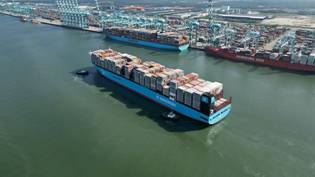


COPENHAGEN: Maersk moves roughly 20% of the global ocean capacity, yet it has less than 1% of trucking capacity of the $770 bn U.S. trucking and drayage services market. That is about to change as Maersk continues to sign contracts with both large and medium-sized retailers to provide Destination Cargo Management (DCM) services, already doubling their customers’ use of DCM services this year.
For Maersk, the success of this growth is about asking the right questions. According to Matthew Koivisto, Head of Transportation in North America, “If you asked any of the top 1,000 importers if they are having problems managing their destination deliveries in say, the LA Port complex, most would say ‘Yes’. By offering this solution as a joint service together with other container logistics products from Maersk, we’ve had a lot of success winning business with some of the largest retailers.”
Destination Cargo Management
The easiest way to understand Destination Cargo Management (DMC), is to think in reverse. For years, Maersk (previously under the Damco brand) has provided a robust supply chain management solution focussing primarily at origin for U.S. importers while still managing everything from land to sea. DCM is essentially a complementary service to Maersk’s Supply Chain Management services, but for U.S. importers at destination.
From the time a shipment is loaded on board the vessel, the DCM team takes over and starts to track it on the water and prepare for its arrival. This includes forecasting discharge dates, managing the allocations between dray providers, and issuing work orders to the truckers well in advance of the vessel arrival so they know what they must deliver.
The real value of DCM lies in transparency. “We provide full visibility to the customer on an end-to-end basis from the time we handle the container at origin to the time it gets delivered to their distribution center in the United States,” said Koivisto. “The DCM team acts as the destination logistics manager for the customer, which means we hold performance meetings with trucking companies and other vendors to ensure everything goes as planned – and if it doesn’t, that we find ways to minimize disruption or delays,” he added.
DCM is detailed and data heavy with performance reporting taking place down to the individual trucker and lane on a weekly basis. This is powerful data for the importer as it allows clients to manage their vendors up to a very high level of performance. “There is no ambiguity in the data. It’s black and white,”
Koivisto added. “The way clients look at this is I would have to employ one, two, or a team of people to do this myself. Or I can subcontract it out to Maersk.”
Supporting U.S. importers through peak season
One example is every year during the U.S. import peak season when there is an influx of containers. Maersk DCM, using their expansive network of resources and owned trucking and drayage carrier, HUDD Transportation, will work to connect with additional truckers for a client so they don’t have to.


You cannot copy content of this page